My Blog
Lisa Verkerk
Making Room for Reflection
Friday, November 5, 2010:

Lisa Verkerk, a former geologist, is a fifth grade teacher at the International School of Amsterdam, where she has taught for eleven years. Lisa attended the Project Zero summer institute for International School teachers in the summers of 2001 - 2003 and joined other Benelux teachers in a Culture of Thinking research project in 2003.
Her personal interest is in using Teaching for Understanding and Visible Thinking approaches within a Culture of Thinking to develop her students’ thinking dispositions.
Lisa is a Primary Years Programme workshop leader, and PZ co-ordinator in her school. She facilitates ongoing teacher study groups focussing on Visible Thinking and Teaching for Understanding as well as hosting a Culture of Thinking Seminar, given each year by Ron Ritchhart for staff and visiting educators.
NOTE: The following is an excerpt written with Lisa for the upcoming book Making Thinking Visible (in press), by Ron Ritchhart, Karin Morrison, and Mark Church.
In 2001, Lisa Verkerk joined thirty-nine other international educators from Europe for a week at the Harvard Graduate School of Education in Cambridge, Massachusetts to explore what it means to teaching for understanding. Throughout the week the teachers read, discussed, and planned units that focused on developing students’ understanding using the Teaching for Understanding framework (Blythe and Associates 1998). While these activities engaged Lisa as a new teacher and forced her to think differently about her unit planning, one experience from the week stood out for her in particular. Everyday when the group of teachers arrived to the workshop setting they were asked to reflect on their own developing understanding of understanding. Starting, rather than ending, the day with reflection was certainly novel, but it was the means of reflection that really caught Lisa’s attention and engaged her as a learner. At the beginning of the week, each participant was given an artist’s sketchbook and asked to create a visual metaphor that represented what understanding meant to them. In a quiet atmosphere punctuated only by the sounds of classical music, participants were provided with a collection of colored pencils, watercolors, crayons, pastels, and collage materials and a half hour to create their visual metaphors.
This initial exploration into visual reflections and metaphorical thinking was certainly engaging for Lisa, but it was the opportunity to revisit the central idea of understanding each day, to reflect anew and integrate current thinking and puzzles, to allow oneself to think through art, and to create abstract metaphors with deep personal meaning that had the deepest impact on Lisa as a learner. Lisa was struck by how powerful this non-written form of reflection could be. Although the use of writing and words weren’t forbidden, they tended to be useful in amplifying the visual rather than replacing it. Furthermore, the open-ended use of materials had a unique way of allowing ideas to flow in ways they didn’t always seem to do in purely written reflections. With the visual, there wasn’t necessarily a beginning or end. The thinking was non-linear. By the end of the week, Lisa knew that she wanted this same kind of experience for her fifth grade students. “I had so enjoyed the experience of using the painted reflection journals, but I was also aware that some colleagues had not particularly liked the experience, feeling that they could not draw or paint, so I was aware that it might be difficult for my students at the start,” Lisa observed.
Back in Amsterdam, Lisa requisitioned a set of art sketchbooks for each of her students for the new school year and began the process of building up a collection of art materials. Lisa knew that setting aside time each day for painted reflections wasn’t even remotely feasible with her schedule. At the same time, she knew that if she didn’t make a regular commitment to the reflection process then her students would be unlikely to experience the power of thinking through art that she had. Her compromise was to set aside 45 minutes each week for the painted reflections. “This meant that it was honored and given time,” Lisa remarked.
In that first session, Lisa began the reflection period by telling her students the story of her own learning through reflection and her plan to use the painted reflection journals throughout the year as a way of regularly reflecting on their learning. She also laid down some ground rules, telling students that this would be a quiet time and that she would put on some music to help them concentrate. She explained that the reflections would be private if students’ didn’t want to share them. However, after the reflection time students who were willing to share could simply leave their books open and the class would have the opportunity to walk around and see one another’s painted reflections. For this initial launch, Lisa chose the topic of “friendship” for students’ reflection. Teaching at an international school where often as many as 30% of students could be new in any given year, the topic of making and being friends was always close to the surface. She asked her students to think about “What does it mean to be a good friend and why do friends matter?” and then to reflect upon those ideas in their painted reflections. Lisa joined her students, this day and in subsequent times, in painting her own reflections.
“The students responded really well,” Lisa noted. “I have a lot of non-native speakers of English and I know they appreciated the fact that they could begin to express their ideas without having to use English.” Over time, Lisa noticed how these students seemed to blossom during the painted reflection time, “These students love the freedom of this activity, that there are no rights or wrongs, words are for once less important than artistic creativity. After a while they find the words too, but at the start it is the experience of painting that helps them to make the connections, even if we cannot talk about it together.”
Lisa continued the regular reflection time each week. Slowly she noticed a change in students’ paintings. “In the beginning, some students wanted to represent their ideas in literal pictures, drawing stick people, houses, cars and whatever,” Lisa observed. “ If they couldn’t draw very well then they became blocked. Some of these students then found it difficult to express their ideas in writing after painting, giving only a simple or superficial reflection. “ To address this issue, Lisa pointed out that this was not about being a good painter or drawer or creating nice pictures but rather a time to express ideas in a different way using materials. She emphasized that she herself was not an artist but found that when she didn’t have to try and draw things but could use lines, and symbols and colors to represent her thinking that it freed her in trying to express herself. “I encouraged everyone to try making an abstract painted reflection, so that they wouldn’t get restricted by trying to draw literal images. Still, I noticed that it was difficult for some students. I would see common themes of colors and patterns in the table groups.” Lisa noted.
Eager to try and advance students’ reflective thinking, Lisa decided to formally introduce her students to the idea of metaphors, the idea that one thing could stand for something else or one thing could be used to illuminate another. “I told them that I sometimes feel like my life is a merry-go-round and asked them to think about why I might make that comparison, “ Lisa explained. The class then talked about the features of the merry-go-round—that it goes around, that things go up and down, there are lights and music, that at first it seems fun but sometimes it goes too fast, you get dizzy and eventually you want to get off, and so on—and made connections to these literal aspects of a merry-go-round and life. Lisa then took the idea of metaphor a bit further, “I explained about visual metaphors, which are in many ways much easier to paint, as the colors, textures, lines, shapes and movements tell the story in the mind of the artist.” She also talked about how color might represent a feeling or emotion or how even a shape might not represent something directly but might stand for some idea. “Again, I asked my students to just try making an abstract painting,” Lisa commented.
Over the years, Lisa has come to recognize this movement from the literal to the abstract as a normal transition period for her students. One that she takes note of and actively seeks to advance, but at the same time is perfectly natural and expected. “Now I find every year that we reach the six-week point and miraculously every painting is unique. Everyone now understands how this works; they have their own ideas to paint about and their own way of doing that. Students start to thoroughly enjoy the process and to share more of their ideas and themselves in the written reflection.”
Drawing on her own experience, Lisa was aware that the power of any reflective experience is largely dependent on the object of reflection. She had spent a week at Harvard reading, discussing and exploring what it means to teach and learn for understanding and time reflecting was an opportunity to synthesize and consolidate what she was learning. To make the reflection journals something that would really push students’ thinking and advance their understanding, Lisa recognized that she couldn’t just ask students to reflect and then give them some paints and expect great things to happen. She had to think carefully about what she wanted students to think about and how these intense moments of reflection would connect to the opportunities she provided for in depth study. Consequently, Lisa began to look for those learning moments that might really benefit from reflecting through art. She found natural opportunities in the class’s reading, often reflecting on the core themes of a book. One example of this was presented as a “Picture of Practice” for Word-Phrase-Sentence in Chapter 4. Lisa also found opportunities in the class’s study of poetry, expressing the meaning of a poem the class had studied through painting.
Lisa also found the essential questions and central ideas from her social studies units were rich topics for sustained reflection. For instance, at the start of a unit on migration, she asks students to reflect on the following questions: What does home mean to you? How does it feel? What do you value about it? Midway through the unit, the class reads various stories about forced migration and studies the plight of refugees. Alex’s reflection on refugees is displayed in Figure 1. At the end of this unit, students reflect on a set of questions to consolidate their learning: What were the most significant things that you learned about in our migration unit? What will you take away and remember as important?
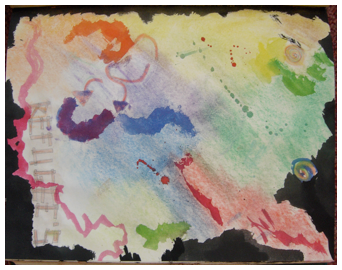
Figure 1: Alex’s Painted Reflection on “Refugees.”
As the first year experiment with painted reflections progressed in Lisa’s room, so did the students’ engagement with the process. It became an important part of the week and one to which that students looked forward. “If we had to miss it due to a special event such as sports day, my students would ask that we still find the time by missing out something else, which we often did,” Lisa stated. At the same time, Lisa observed how important the modeling of both reflection and the use of metaphors were to students’ development. “After each session we walk around looking at the paintings and reading the written reflections. Students ask each other questions and afterwards point out things that they like or are interested in. It is in this way that they develop the confidence to let their minds run all over the topic, to make connections to their own lives, to express their feelings, beliefs and values.” Lisa shared. “Each week they write more and more to explain their paintings. Sometimes we share very personal things that we would have no reason to discuss in other situations. We make an agreement that what we share in our reflection journals is personal, so to make that safe we should not speak about another person’s reflections outside of the classroom. Students find it fascinating to see the different perspectives people have about the same topic or theme, and gradually begin to trust and value their own perspective
Lisa also recognized the important role that her own modeling plays in students’ valuing of reflection. “The important word here is honesty. My students see me sitting very quietly, often with my eyes closed. I become completely absorbed and excited about the materials and how the picture is unfolding and then I write, sometimes all over the picture or at odd angles. So my exploring encourages them to be more adventurous too. I am totally honest, and although I am writing from an adult perspective, my reflection still connects to what we have been exploring together in class. So I trust them with my honesty. Maybe that gives then the courage to be vulnerable too? I talk about how this activity helps me to focus in on what really matters to me, and they see how much I really enjoy doing it. We take our time to share and discuss each reflection, so valuing the rich thinking, and learning from each other’s perspectives. This sends a clear message, that I think pausing in our busy day and taking time to reflect matters.”
By the end of the school year, Lisa’s students came to value this weekly time so much that many remarked they would continue the process of painting their reflections on their own at home. Most students felt it really added to the development of their understanding and learning. Danniyal commented on his process of reflecting through painting by saying, “When I am painting my reflections, sometimes I just go on and then when I am in the flow then I start saying, yeah I can put this down which represents this and I can put this down that connects to that.” Several other students also recognized the notion of flow and how the act of painting could advance and promote thinking. Henny observed of himself, “Usually I don’t think deep enough or understand it totally but when you start painting or drawing it helps. You write a bit and you draw, and you think much deeper.” Alex echoed these sentiments saying, “You get a deeper understanding of what you are painting, and you can make more connections and then you can paint about that.”
Leor, a non-native English speaker, shared how painting helped her express her thinking; “It is much easier to paint than to speak the words out for your ideas. And then I can look at it and see more things that I have learned and what I know.” She even painted her understanding of how her limited proficiency with English was often a barrier to her expression and understanding. Her representation of brick wall holding back a world of ideas is shown in Figure 2.
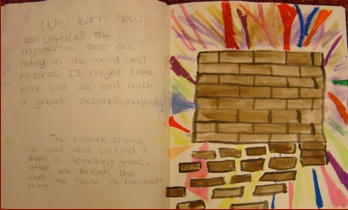
Figure 2: Leor’s Painted Refection: What is understanding?
Now, several years along the path of doing painted reflections with her student, Lisa reflects on what this routine has come to mean to both her and her students, “The time we share doing this is very special. We all enjoy the process: the soft music, the lovely materials. It is as if we are stealing a little time for ourselves in what can often be a hectic day, moving around to different classrooms all over the school. The activity asks us to engage with the emotional self, a part of us that we often keep hidden. The sharing of that self bonds us together, we develop a deeper level of respect and understanding. In this activity there is no competition; no one is more correct; no one scores higher. We are all equal.” Lisa feels the time she spends developing this pattern of behavior in her classroom each year helps students to be better thinkers as well, “Learning to truly listen to another, to try to understand their point of view, however different to your own, is an essential part of creating an effective culture of thinking. If we can do that then we can truly think and learn collaboratively. I have a favorite instructional throughline that I use each year, ‘Why is thinking together more powerful than thinking alone?’ It may take a few months but eventually a student each year will eventually quote that back to me – it’s a moment that always makes me smile. “

Download the PDF here